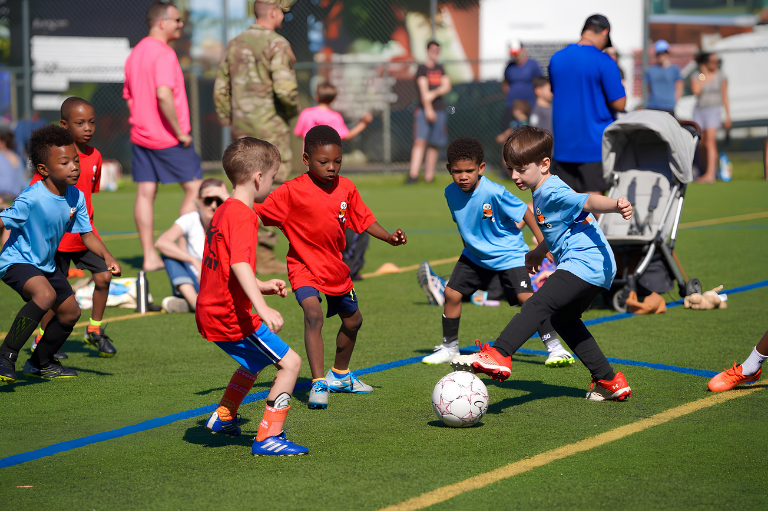
If you ask most parents why their kid plays soccer, the answer usually starts with something physical: exercise, staying active, burning off energy before dinner. All true. But there’s something else happening out on the field that doesn’t get talked about nearly as much, and it has less to do with legs and more to do with what’s going on between the ears.
The Study
A study published in JAMA Network Open looked at kids who played team sports like soccer and compared them to kids who didn’t play sports at all, or who only played individual sports. The team-sport kids scored higher on tests of executive function, the set of thinking skills that let a person organize, remember details, make decisions, and stay focused under pressure.
Dr. Alison Brooks, who wrote a commentary on the study, put it plainly: these are “among the most key life skills of all.” Not soccer skills. Life skills.
What’s especially worth noting is that the researchers found this effect was even stronger among kids from lower-income and minority families, exactly the population that access barriers, like cost, tend to push out of organized sports first. Which raises a real question: if team sports meaningfully help a child’s developing brain, are we accidentally making that harder to access for the kids who could benefit the most?
Why Soccer, Specifically?
Soccer isn’t the only sport that builds these skills, but it’s a particularly good one for it, and here’s the mechanism. A soccer match is constant, fast-moving decision-making. Where’s the open space? Who’s open? Is there time to take a touch, or does the ball need to move now? A player is reading the field, predicting what happens next, and adjusting in real time, dozens of times a minute.
Researchers call the result of all that practice “game intelligence,” the ability to quickly read a complex, changing situation and choose an effective response. That’s not just a soccer skill. It’s the same mental muscle a kid uses when they’re trying to follow multi-step instructions in class, manage a group project, or keep their composure when something doesn’t go their way.
There’s a physical piece to this too. Regular aerobic activity increases blood flow to the brain, delivering more oxygen and the nutrients that support healthy brain function. Combine that with the split-second decision-making a match demands, and you get a sport that’s training the body and the brain at the same time, without a kid ever thinking of it as “training” at all. To them, it’s just a really fun way to spend an hour.
What This Actually Looks Like at Practice
None of this requires anything special or clinical. It’s built into the game itself:
- A kid deciding, mid-play, whether to pass or dribble
- Adjusting position based on where a teammate or opponent moves
- Remembering a coach’s instruction and applying it three plays later
- Staying focused on the ball while everything around them is in motion
Every one of those moments is a small rep for the exact skills the research is talking about. A kid isn’t doing a worksheet. They’re just playing, and their brain is getting stronger because of it.
The Takeaway
Soccer was never just about soccer. It’s cardio, yes. It’s fun, yes. But it’s also quietly building the kind of focus, memory, and decision-making that shows up everywhere else in a kid’s life, in the classroom, at home, in how they handle a tough moment.
So the next time your kid comes home from practice a little tired, know that something else came home with them too. A sharper mind, one pass at a time.
Curious what a session actually looks like? See our fall programs and find the right fit for your child.